
Written by: Alaina Perez, Slideshow by Tiffany Sudijono
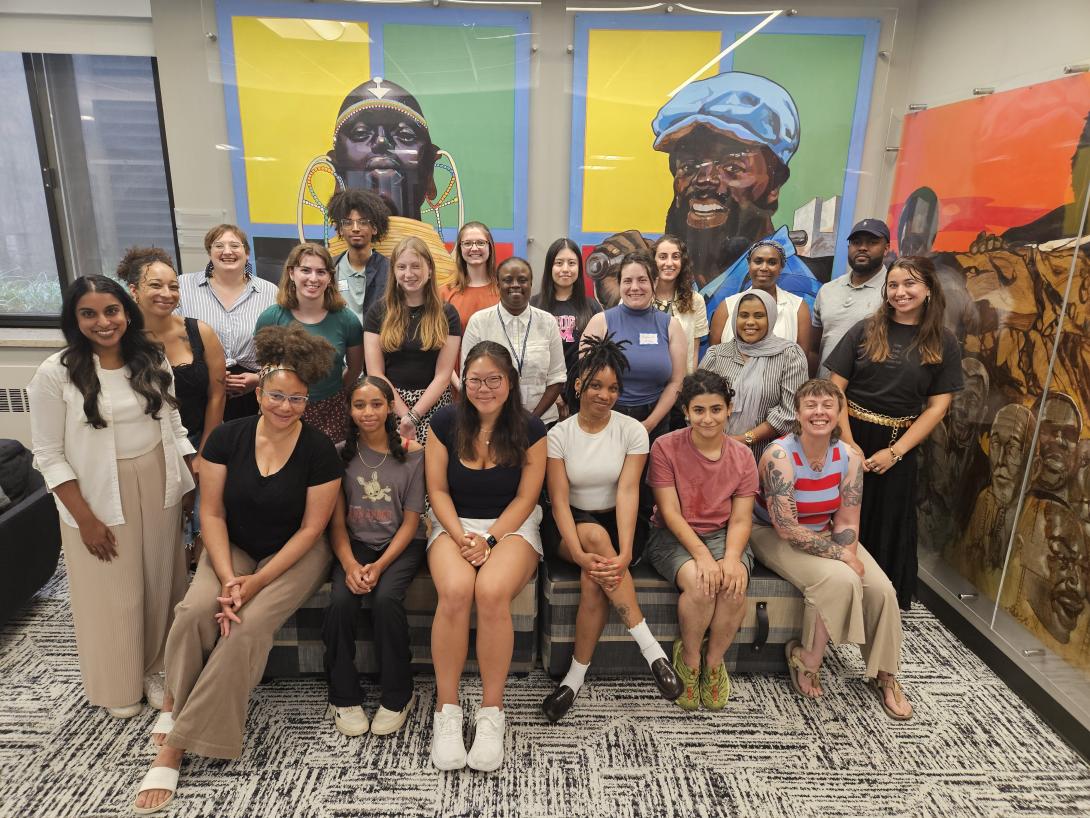
The Ginsberg Center’s Storytelling for Social Change (SFSC) program recently concluded its fourth year with ten exciting projects, culminating in an evening of community, connection, and celebration. This season’s student storytelling consultants and community partners were joined by Ginsberg staff, program alumni, and co-educators from campus and community to highlight the important work they did.
SFSC partnerships focus on supporting nonprofits, schools, and governmental organizations in sharing stories that illustrate the heart of their work while creating opportunities for students to build skills in storytelling and content creation.
Some of the initiatives our student consultants participated in this season include assisting their partner organization with their social media profiles and content, drafting newsletters to be sent to stakeholders, composing annual reports, and creating and organizing webpages for public-facing audiences.
An Evening of Reflection and Connection
Circled around tables filled with food and drink from Chelas, a local restaurant, students and community partners shared space to discuss their experiences working with Storytelling for Social Change.
Having prepared questions in advance, student consultants and Ginsberg staff initiated conversations, reflecting on their season of change.
Why are you drawn to social change work?
“It’s a collective responsibility,” one student answered. “There’s a lot of harm being done in our communities, and I want to combat that with something good.”
Several students nodded in agreement, commenting on the sense of ownership and accountability they developed over the course of their time spent working with their community partners.
Throughout the night, the student consultants were applauded for their professionalism and empathy, showcasing their commitment to telling stories in honest, fair, and productive ways, while also recognizing their roles as stewards of social change.
How do you see your work with SFSC fitting into your future plans?
Many students expressed that they would pursue nonprofit work after graduation and wanted to continue working more hands-on in their community, rather than solely learning about equity issues in their classes.
One community member remarked how rewarding it was to connect with her student consultant “over the life-changing power of the outdoors.” As her student nodded enthusiastically, it was plain to see the strong relationship they had formed over their time together and why they decided to continue that work after the SFSC partnership concluded.
The conversations continued with student consultants and their community partners sharing that while their work was not without its challenges, they relied on each other for success.
Relationships and Reciprocity
One of our community partners expressed gratitude for her student consultant:
Thanks to her creativity, talent, and innovation, we were able to produce a final product that truly exceeded expectations. She was incredibly resourceful and brought a wealth of ideas to the table. She paid close attention to every detail….Her dedication, professionalism, and keen eye for design and storytelling made all the difference in the success of this product. Your choice could not have been better.
A hallmark of the Ginsberg Center’s SFSC program is its ability to match community organizations with motivated students who share similar values, interests, and priorities. Additionally, one of the Ginsberg Center’s Principles of Community Engagement concerns fostering long-term stewardship and relationships with community partners that last beyond a particular project or engagement.
Amanda Healy, the Assistant Director for University-Community Partnerships, or as she calls herself, the matchmaker for the Center, explains why working with Ginsberg’s SFSC program is so valuable:
Community partners often say that they get 10,000 students interested, then a group shows up just once when they really need one student who clicks and sticks around. Many community partners would rather end up with one student who works long-term rather than 25 students who volunteer a couple of times. Our hope is to catalyze those interactions. Some students stay with the program across their college experience, some get involved with other Ginsberg initiatives, some look for different jobs/paths because of their experiences with SFSC. And their community partners become mentors in life, as well as in their careers.
To prepare students for this work, SFSC student consultants participated in workshops covering skills like appreciative interviewing, where they learned how to effectively build relationships with, interview, and collect stories or information from individuals and communities.
Although this season of SFSC has concluded, several students plan to keep working with their community partners after their current projects are completed, including three students who were funded through a grant to continue.
Thank you to Breyko, Community Action Network, Community Family Life Center, Empact, Groundcover News, National Wild Turkey Federation, Parkridge Community Center, S.H.E., and the Washtenaw County Resiliency Office for sharing your work and your wisdom with our students! To see a full list of the organizations and student storytellers that participated in this season’s work, please visit our portfolio website!
Connect With Us
SFSC takes on students and community partners every year, and we're always seeking new co-educators to collaborate with. Have knowledge, skills, or insights to share with aspiring Storytellers? Check out our Storytelling for Social Change Page and Storytelling for Social Change Portfolio Website.
Interested in partnering with the Storytelling For Social Change program? Reach out to us at [email protected] and a matchmaking specialist will get back to you soon!