
Written by Alaina Perez
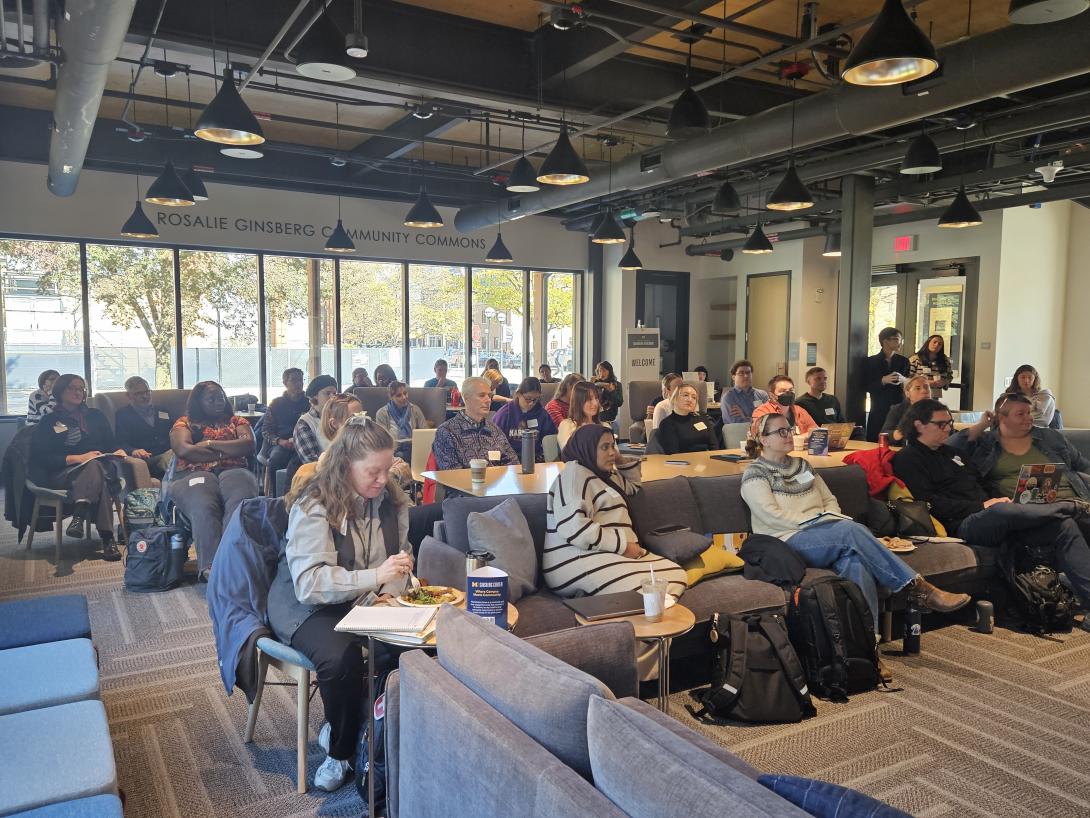
On October 27, National Civics Day, U-M faculty, students, and community partners came together for the biennial Dewey Dialogue event. National Civics day celebrates the role and beneifts of civic education from improved critical thinking to community service and civic engagement. This year's Dewey Dialogue, themed “At Home in our Community,” celebrates and reminds us of John Dewey’s contributions to the fields of education and civic engagement while focusing on the role we can all play in making everyone in our community feel welcome. Neeraja Aravamudan, director of the Ginsberg Center, also reminded guests that “While Dewey is often credited for spreading the idea of experiential education and 'learning by doing,' we also know many communities have been promoting this approach for generations.”
Aravamudan further explained the center’s priorities when it comes to community and academic partnerships:
[At Ginsberg], we think a lot about how we can help create the conditions for successful partnerships. From making implicit beliefs and preferences explicit to openly discussing power differences and how to account for them in the way partnerships are set up, structured and adjusted. Since the beginning of the Center (and the field), we have wrestled with questions like: How do we effectively practice partnership? How do we move through the inevitable tensions? How do we ensure that everyone involved is getting what they want from the partnership? And how do we learn from our experiences together and share that knowledge with others?
In this spirit, academic partners, community partners, and U-M students gathered to share testimonies of their experiences working with the Ginsberg Center. Amongst the attendees, chatter filled the Center’s Community Commons as connections were formed and networks expanded.
Our Featured Panelists
The day highlighted short lightning talks from faculty, students, and community partners, who were matched and supported by Ginsberg Center staff, to discuss their collaborations and experiences working together.
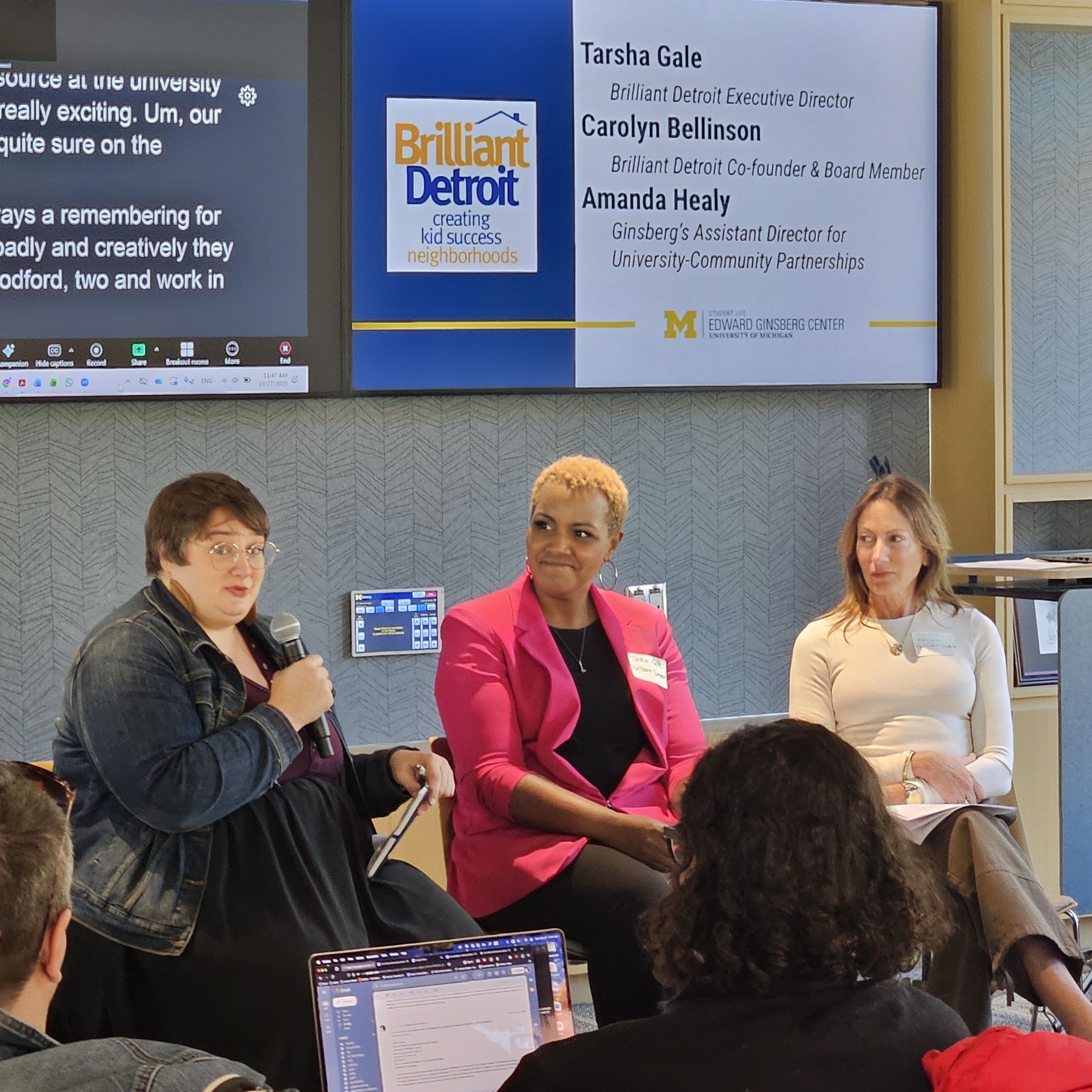
Brilliant Detroit - Executive Director Tarsha Gale and Co-Founder and Board Member Carolyn Bellinson of Brilliant Detroit were joined by Ginsberg’s Assistant Director of University-Community Partnerships, Amanda Healy, to share their experiences working together to establish a network of community hubs in Detroit to help families get the support they need. Often in vacant/repurposed spaces, these hubs encourage families to participate in free programs including literacy support, early childhood development, nutrition, physical fitness, community meals, and mental health support groups.. Their talk highlighted how one mother of four found support and solace in their community hub, taking advantage of mental health services so she could better care for her children. As one panelist commented, “To help a child, you need to help the caregivers, as well.” Brilliant Detroit currently has 19 hubs in the city, with each servicing around 125 families.
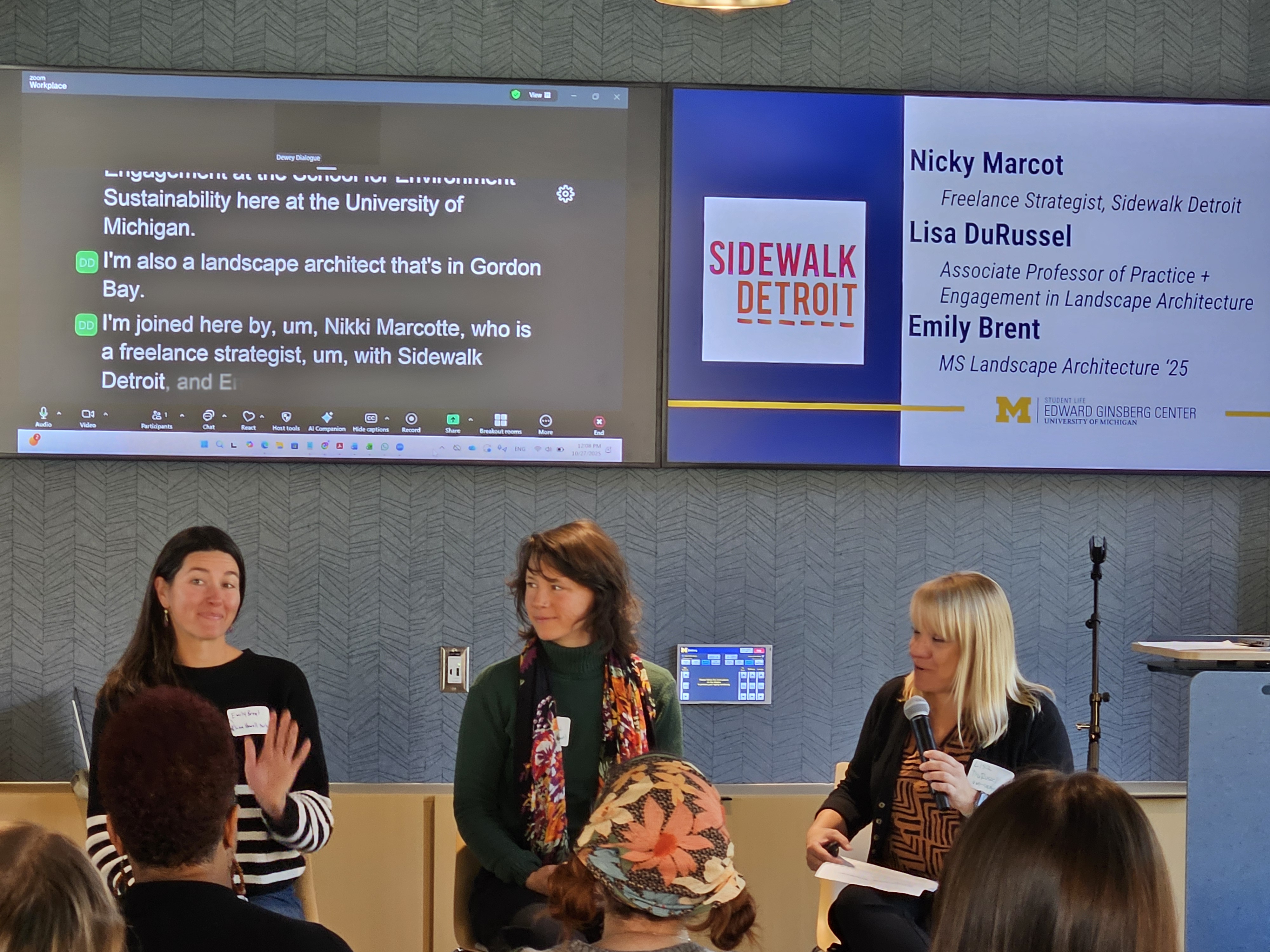
Sidewalk Detroit is a community group “celebrating Detroit landscape and culture through socially relevant public art, community engagement, and advocacy.” Nicky Marcot, the organization’s Eliza Howell Park Strategist, presented with Lisa DuRussel, a U-M Clinical Associate Professor in Landscape Architecture, and her student, Emily Brent, to detail the work they did as part of DuRussel’s class, celebrating community at their Sidewalk Festivals and reimagining Eliza Howell Park. The organization’s Sidewalk Festivals bring together art, recreation, and community “to celebrate the magic of Detroit's neighborhood streetscapes.” With over 5000 attendees annually, the Sidewalk Festival has become a mainstay in the city, promoting spatial equity and centering communal joy. For the Eliza Howell Park renewal, the organization first went directly to the Brightmoor community, holding interviews and a neighborhood dinner to share hopes and expectations for the park’s revitalization.
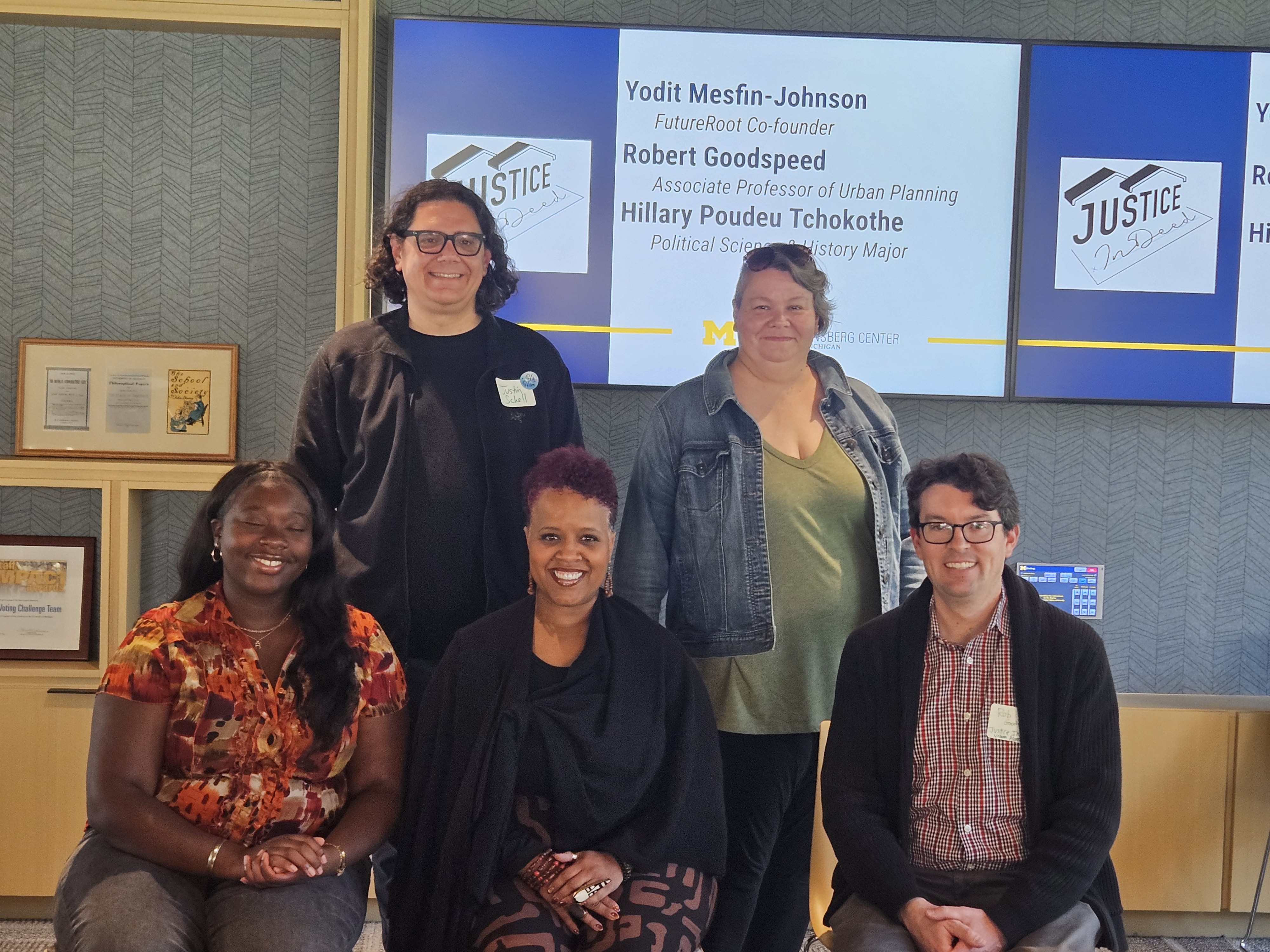
Justice InDeed is a community collaborative project that seeks to better understand and repair the harms done by racially restrictive covenants in Washtenaw County by recording and mapping housing deeds that contain this language. Yodit Mesfin-Johnson, Robert Goodspeed, and Hillary Poudeu Tchokothe began their talk by defining “racially restrictive covenants” as provisions and records that prohibit the sale of homes to residents of color. The organization held numerous transcription parties, some hosted by the Ginsberg Center, to encourage completion of the more than 14000 deeds while supporting the participants' often strong reactions to the content they transcribed. One panelist commented that working with the university was challenging at first, but they began to feel more comfortable after working with the Ginsberg Center, a space that created “psychological safety” for them.
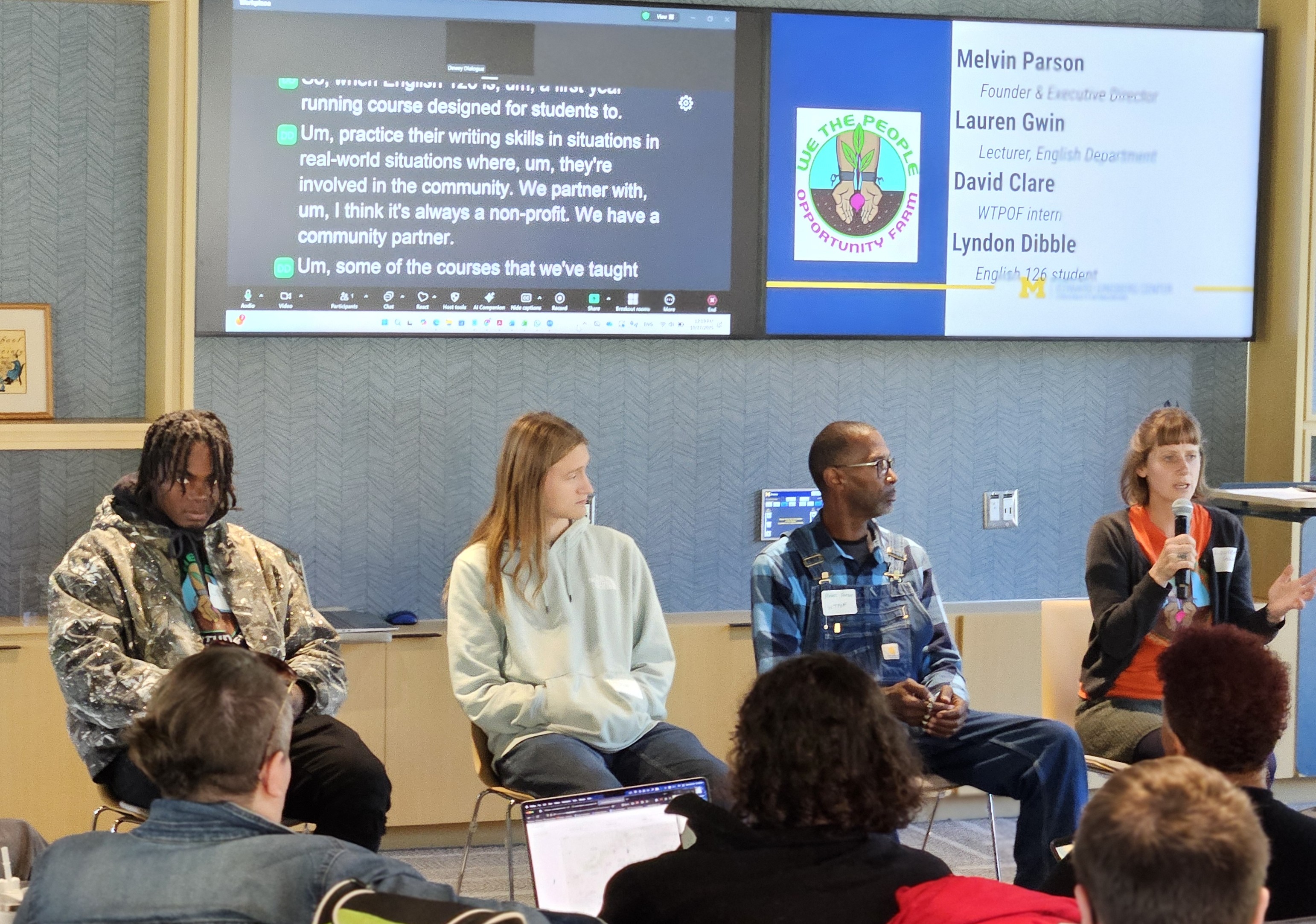
We the People Opportunity Farm works to reduce recidivism and provides formerly incarcerated individuals with meaningful work, mentorship, and a supportive community through farming and agriculture. The farm hosts a number of men and women who are given a nine-month, paid internship and taught how to “prep and nurture the soil, plant and harvest crops, and deliver produce to local restaurants.” After their internship ends, the organization partners interns with secure employment, training, and further education. The panel featured Executive Director Melvin Parson and David Clare, one of the farm’s interns, as well as Lauren Gwin, a lecturer in the English department at U-M, and Lyndon Dibble, one of Gwin’s students, who had the opportunity to work with and learn from Parson and Clare. Echoing another panelist, Parson expressed his gratitude for the safe space created through the partnership with Ginsberg.
Conversation and Collaboration
During energetic breakout discussions, guests were given time and space to talk and process with each other and the panelists, asking questions and seeking support on their own projects and initiatives. Attendees discussed with panelists the ingredients for an effective partnership, how to fully engage with stakeholders, and the potential challenges that might arise for those who work for the public good. During the breakouts, one comment from a community partner stood out from the rest, “Whatever you’re trying to do, go to Ginsberg first.”
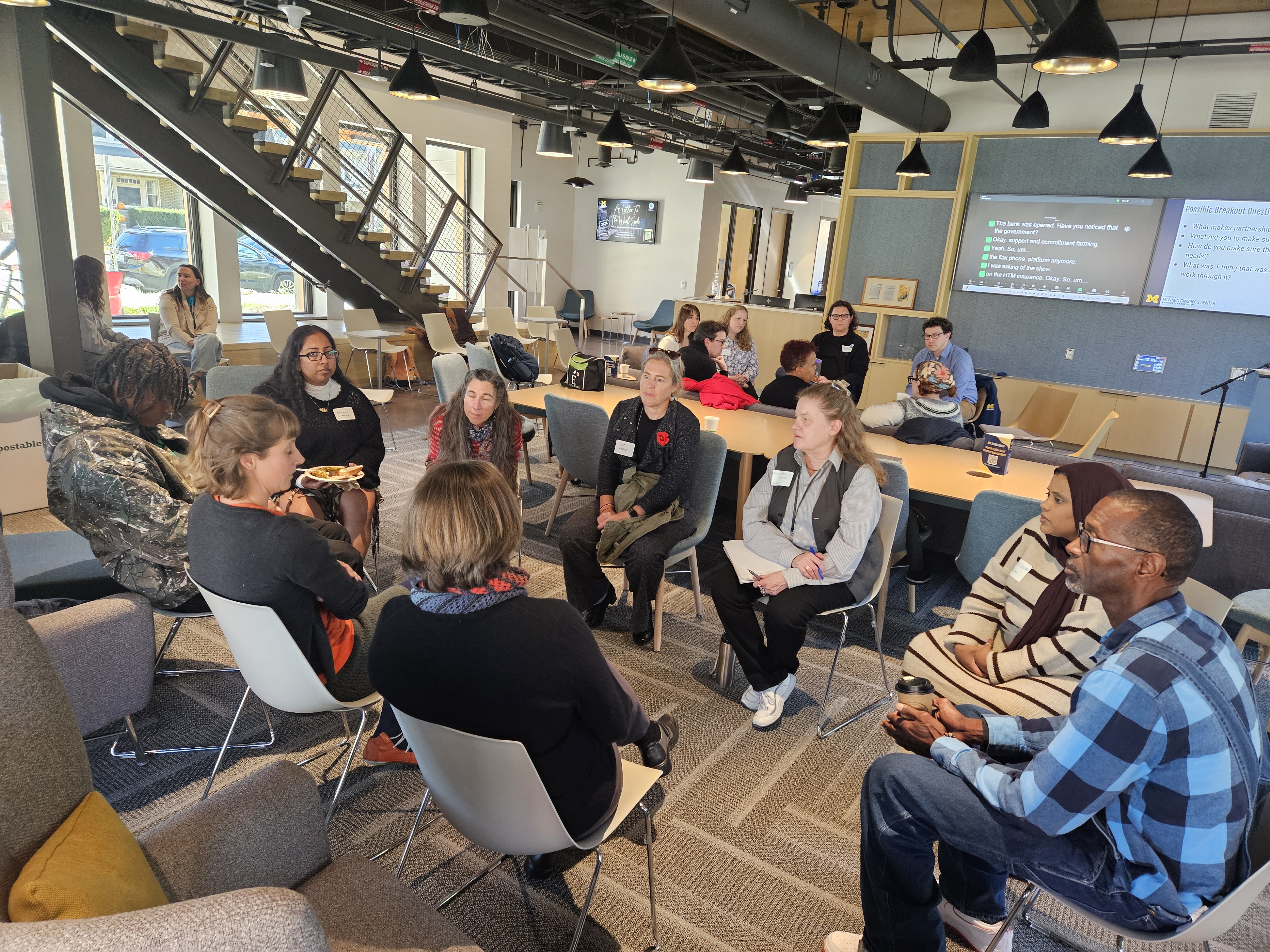
Many university-community partnerships begin through our intentional and reflexive matchmaking approach, and as Jess Letaw, our Community Leader in Residence, put it, the work “doesn’t end here.” Ginsberg partnerships leave lasting impressions and foster renewed energy for social change that far outpaces the timeline for any individual initiative. This year’s Dewey Dialogue event taught us that working together and learning through hands-on experiences create the conditions for deep connections and meaningful impact.
Connect with Us!
If you’re interested in partnering with us or learning more about our services, complete our Support Request Form or contact us at [email protected].