
Each year, Ginsberg Center works with dozens of students to connect them with community-based experiences that deepen their civic skills and knowledge of how to partner effectively with communities. Our newest current student cohorts are working with local partners on a range of different projects.
America Reads
The America Reads Tutoring Corps is committed to meeting the challenge to have all children reading well and independently by the end of third grade. The program's mission is to enhance kids' literacy skills, provide greater access to books to develop a home library and offer opportunities for kids to read and develop a relationship with a caring young adult. This fall, we have over 50 U-M students tutuoring K-5 students in Ypsilanti and Ann Arbor, as well as several after school programs at Family Learning Institute, Bright Futures, and 826 Michigan.
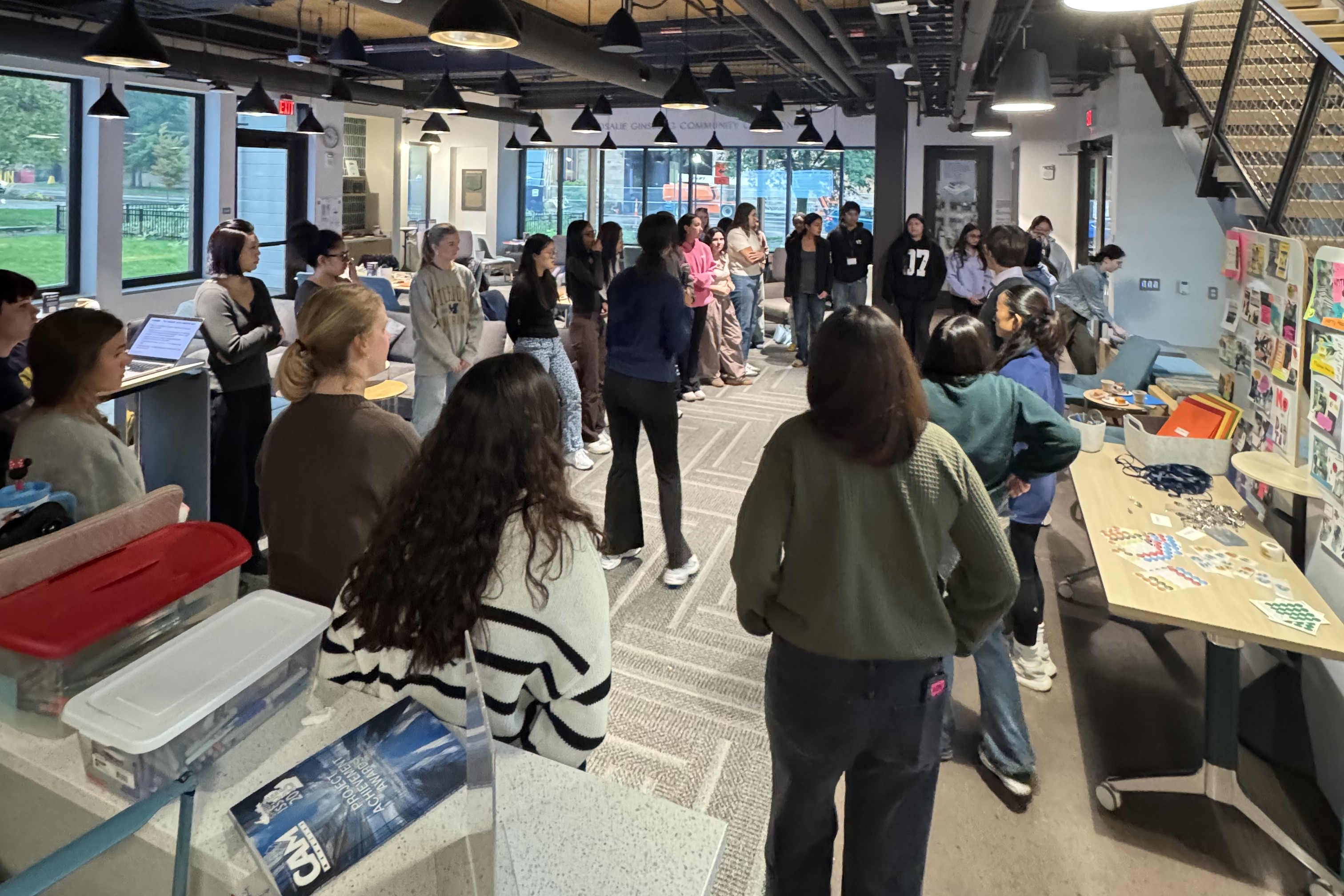
We recently held the America Reads Kick-Off Training event, with sessions led by students, grad assistants, team leads and Ginsberg staff. At the end, new tutors had an opportunity to ask questions and meet returning tutors.
Community Technical Assistance Collaborative (CTAC)
CTAC is a community-university partnership focusing on data and evaluation. CTAC partnerships center support for nonprofits, schools, and governmental organizations to grow, while meeting the educational goals of students. A few of the CTAC projects this year include:
-
Developing a new survey for Washtenaw County Health Department (WCHD), Washtenaw County Community Mental Health (WCCMH), and National Alliance on Mental Illness of Washtenaw County (NAMI-WC) to measure mental health stigma and establish baseline metrics to track progress over time.
-
Conducting a benchmarking study for Friends In Deed (FID), a long-standing Washtenaw County nonprofit focused on poverty reduction, to inform future discussions about staff recruitment, retention, and organizational sustainability.
-
Supporting Michah 6 Community to improve their gratnt reporting and program monitoring through comparative analysis of Center grants to identify overlaps and differences between them to better understand the social needs of its current patients and family members. Students will also help distinguish between needs that are being met through BCFM, needs that are being met through other organizations, and needs that remain unmet.
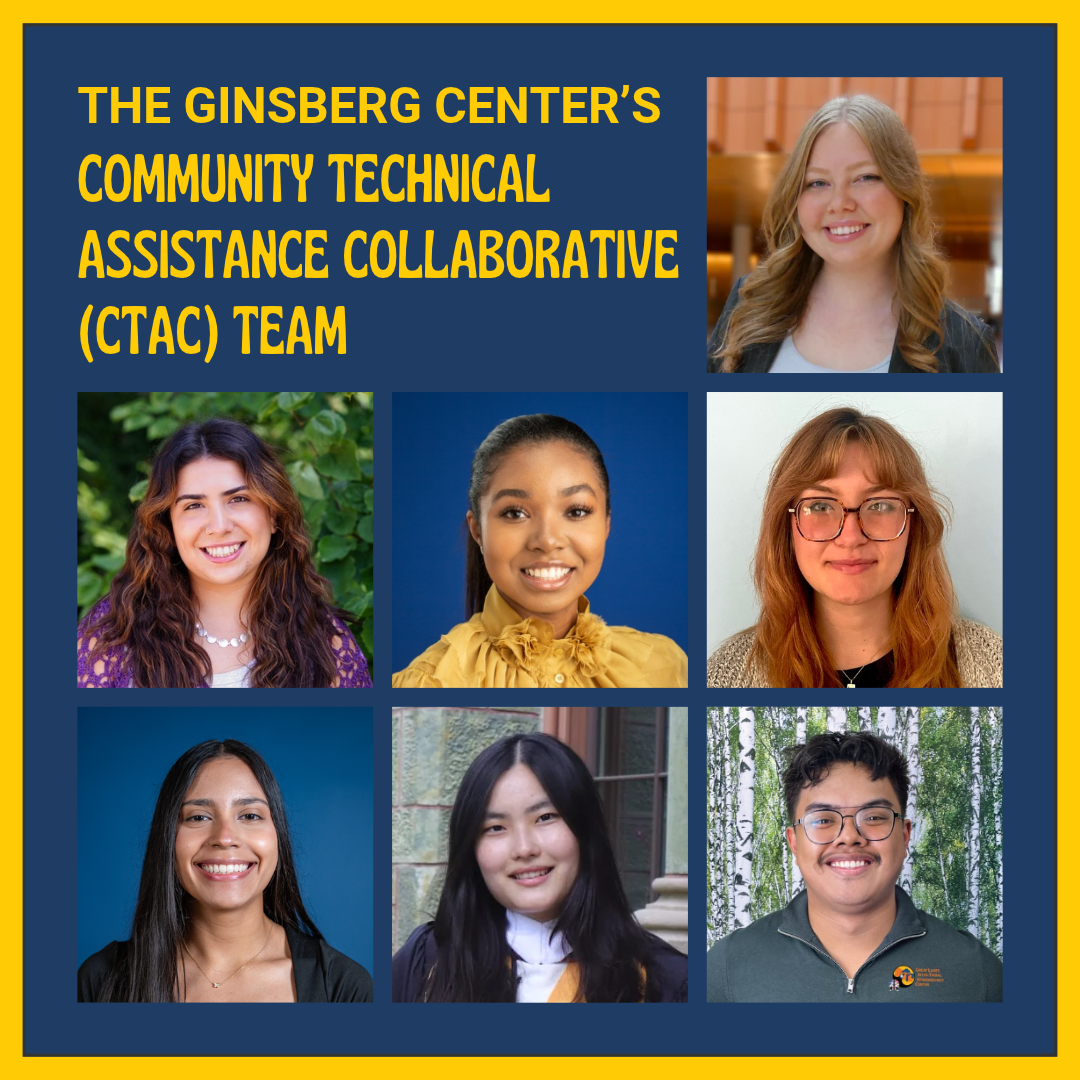
CTAC is about bringing together two things: community organizations that have important work to do but may not have the capacity or resources to do everything they want to do, and students who are eager to learn and use their skills in meaningful ways. When we bring those two groups together, both benefit. I’m really excited about this Fall's cohort; we have 6 active community partners and 9 students starting out.
Brianna Christy, Ginsberg Data & Evaluation Specialist & CTAC Coordinator
Ginsberg’s Student Advisory Board (SAB)
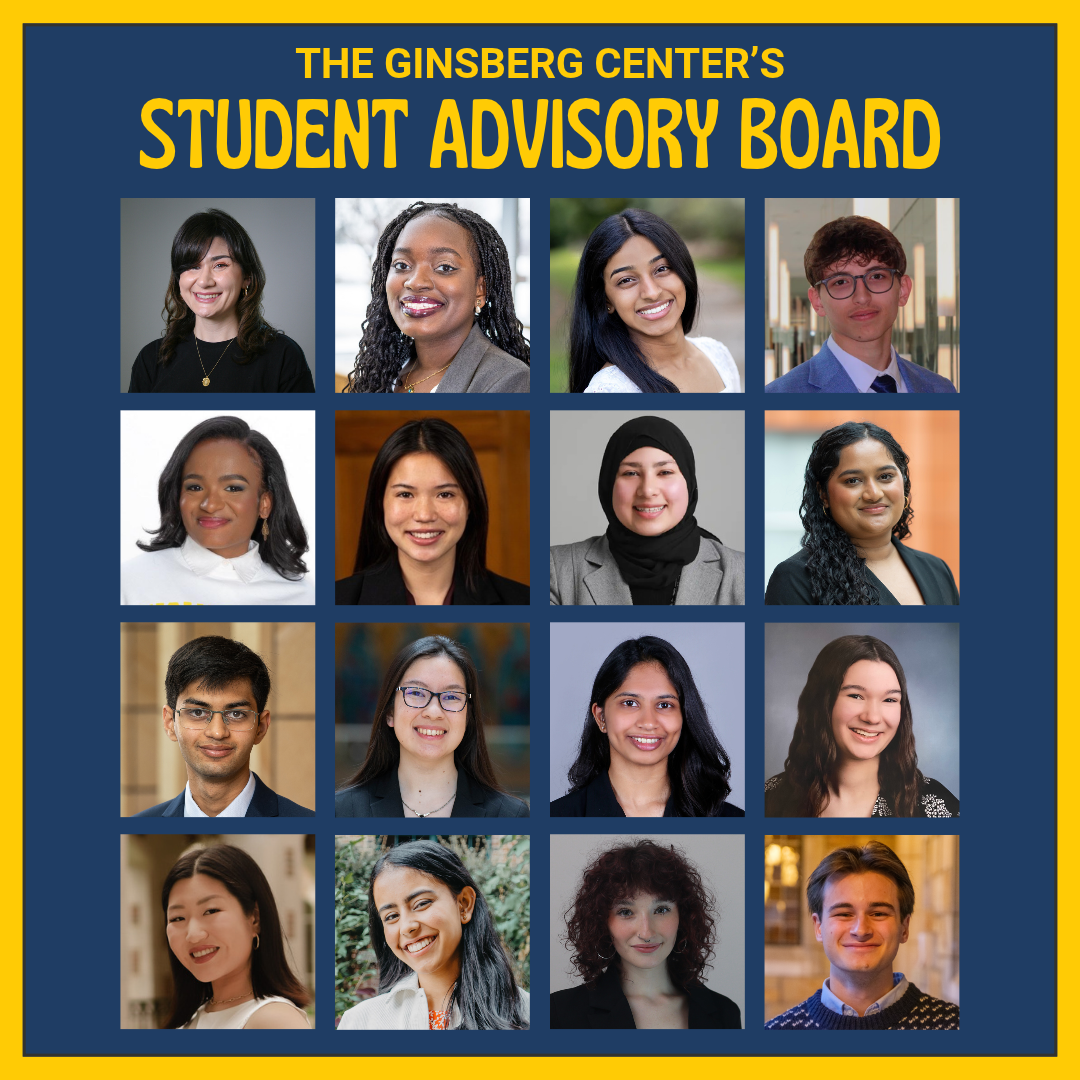
The Student Advisory Board is a place where undergraduate and graduate students from all different areas of the university can come together to make community with one another and to support the mission of the Ginsberg Center. They support our mission through providing us feedback from the student perspective and supporting our work through reviewing student grants, staffing our outreach tables, serving as Volunteer Connectors, supporting the Center's Civic Engagement work, and representing the Ginsberg Center across campus.
Student Perspectives:
"Put a few students around a
table, and a "simple" question gets interesting pretty quickly. I value SAB because our different experiences can change the questions Ginsberg asks and the choices it makes. There’s something exciting about thinking together and leaving the room with an idea you couldn't have arrived at alone." - Eda Bozkurt, '26
Ginsberg has been an excellent source of finding good in my everyday community. The Student Advisory Board has enabled me to see into small pockets of joy and social cohesion throughout the Michigan fabric. I find myself continually in awe at the beauty that everyone is capable of making when they find a passion. As a board, we are also becoming a lot closer, which I dearly love because everyone here is so wonderful and it’s so nice getting to know who you are working with and the good we are all promoting! - Ty Anderson, '27
I have truly been inspired by my discussions, specifically my one-on-one coffee chats with members from the Student Advisory Board. To hear about the passion and dedication to distinct causes that many of our members possess is invigorating and makes me motivated to put action to my beliefs in my own passions! - Yuvika Mukherjee, '26
Community Leadership Fellows (CLF)
Community Leadership Fellows commit to spending 8-10 hours per week working with local nonprofit organizations, schools, or government agencies. CLFs have completed a variety of projects in the past, including maintaining organizational social media accounts, creating online content, conducting research, writing grants, designing curriculum and trainings, and tutoring, mentoring, and teaching local K-12 students.
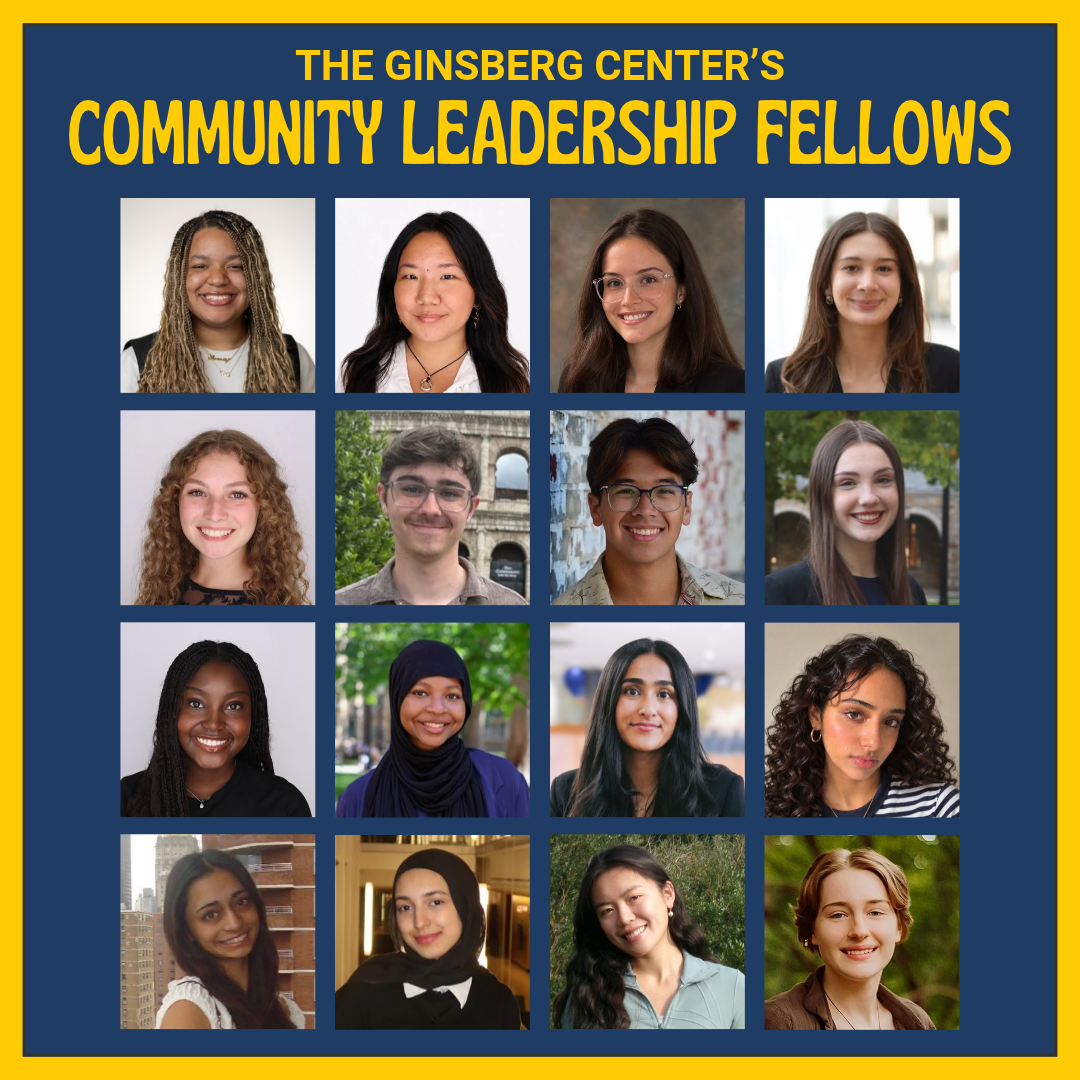
Recent CLFs were asked, “If you were to describe the CLF experience in three words, what would they be?” Students said the words community, outreach, pragmatic, informative, creative, local, collaborative, and respectful best represented their internship experien
ces. One student described their time working with qualitative research: “When cleaning and reading the data, you get brief glimpses of new perspectives, and when you view them together, you can see how to create something inclusive, inviting, and relatable to everyone. This experience added a new bullet to my resume but, more importantly, helped me understand the importance of qualitative research.” CLFs are consistently challenged to develop skills and mindsets that will serve them well beyond their internships and formal education.
Graduate Consultants
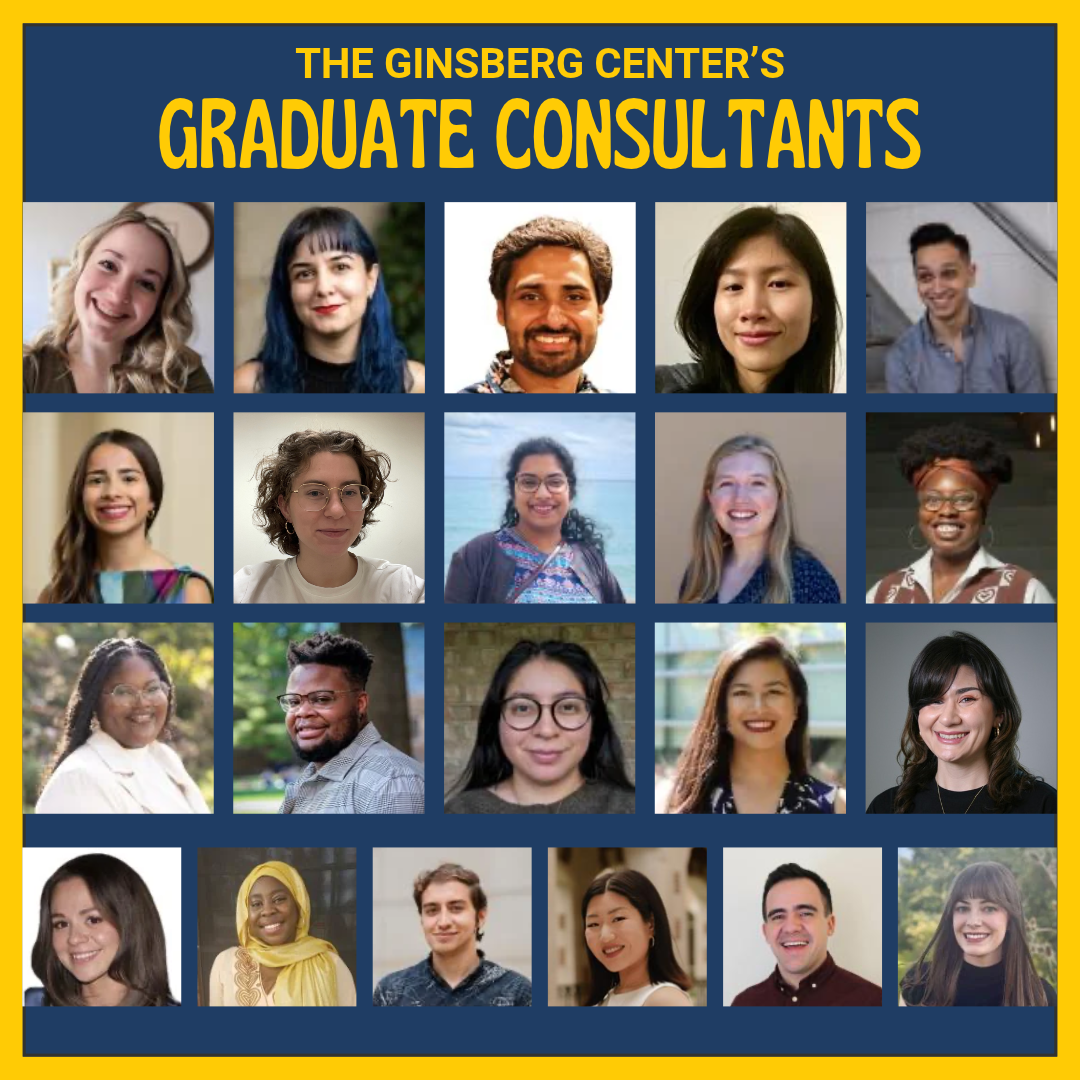
The Ginsberg Center offers a leadership development opportunity for University of Michigan doctoral students and candidates called the Ginsberg Graduate Consultant Program. Graduate Consultants deepen their knowledge and application of community-engaged scholarship, education, and practice, and provide perspectives on their home departments and fields.
Engaged Learning Graduate Consultants
Engaged Learning Graduate Consultants are trained to facilitate workshops, contribute to the development of new curriculum, develop and practice skills leadership, and engage in professional development to develop a professional identity as a community-engaged consultant and educator.
"Engaged Learning Graduate Consultants are the backbone of our student preparation process - they facilitate over 50 workshops every year, training U-M undergrad and grad students in ethical and equitable community engagement," shares Jessica Kane, Academic Partnerships Manager.
Community Partner Graduate Consultants
Community Partner Graduate Consultants support Ginsberg’s relationships by consulting with partner organizations in check-in meetings, scoping new potential partnership projects, and updating Community Partner priorities in our campus-wide database
"This year, we have two positions in West Willow with a mobile clinic that’s responding to an urgent priority. We provided fast, flexible, and responsive funding when a clinic in that community was closing. Our Community Partner Graduate Consultants are able to dig into projects in our communities that might not get finished otherwise, and we give them the support they need to sustain these collaborations with students. " Amanda Healy, Assistant Director of Community-University Partnerships, shares,