
Written by Alaina Perez
In mid-March 2026, the Ginsberg Center, in collaboration with multiple campus partners, helped host the first of a series of events focused on improving Community Partner Compensation Practices, in which community members, faculty, staff, and others gathered together to re-envision policies that guide how we compensate our community partners for the important work they do.
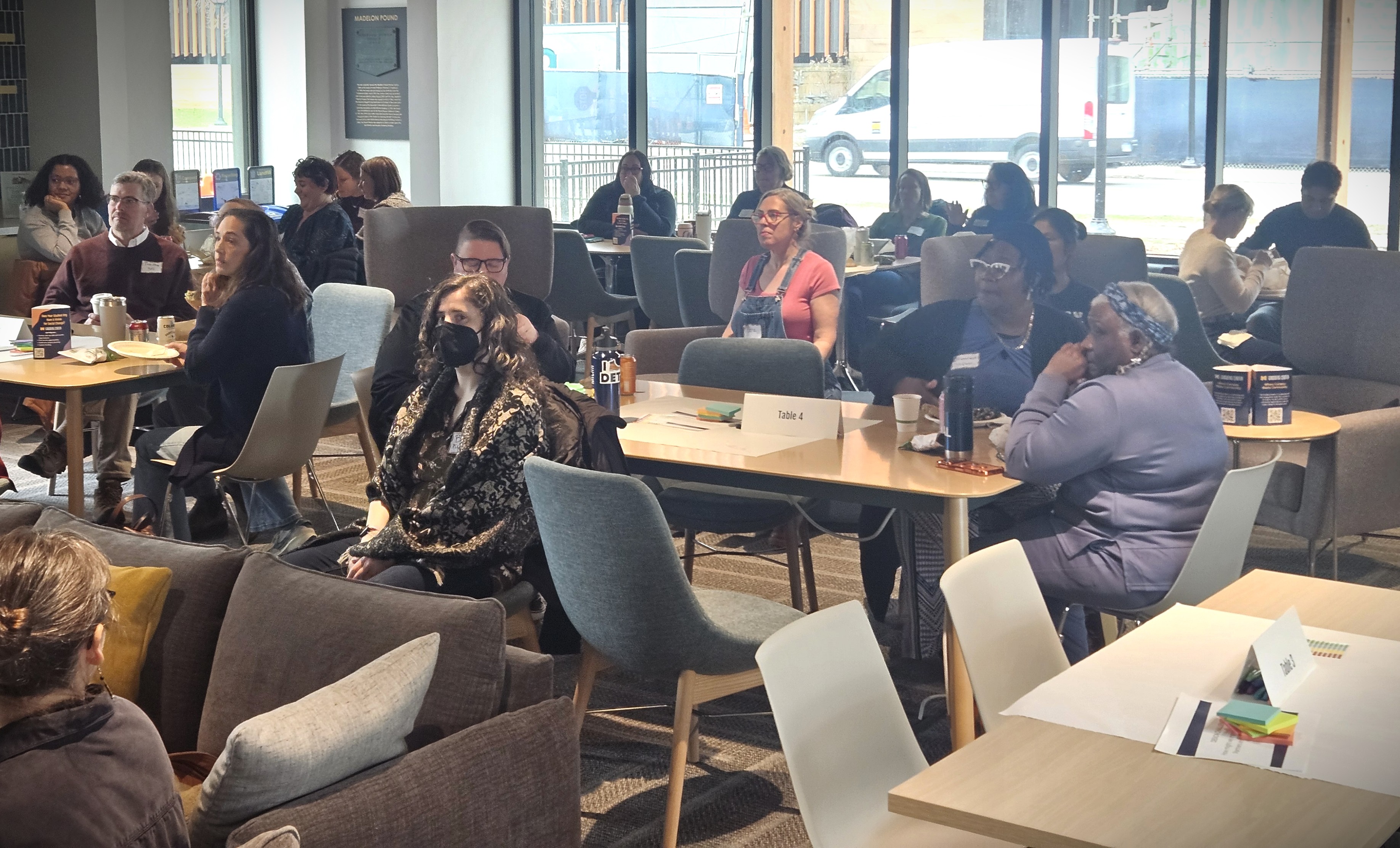
Using a Design Jam format to get as many perspectives as possible, the event centered around collaborative problem-solving, asking participants to work together to analyze the current policies and make suggestions for best practices moving forward. The question that centered participants’ work was, “How might we improve how community partners are compensated at U-M?” The goal was to collect as many ideas and solutions as possible to inform the agendas of working groups formed at the event.
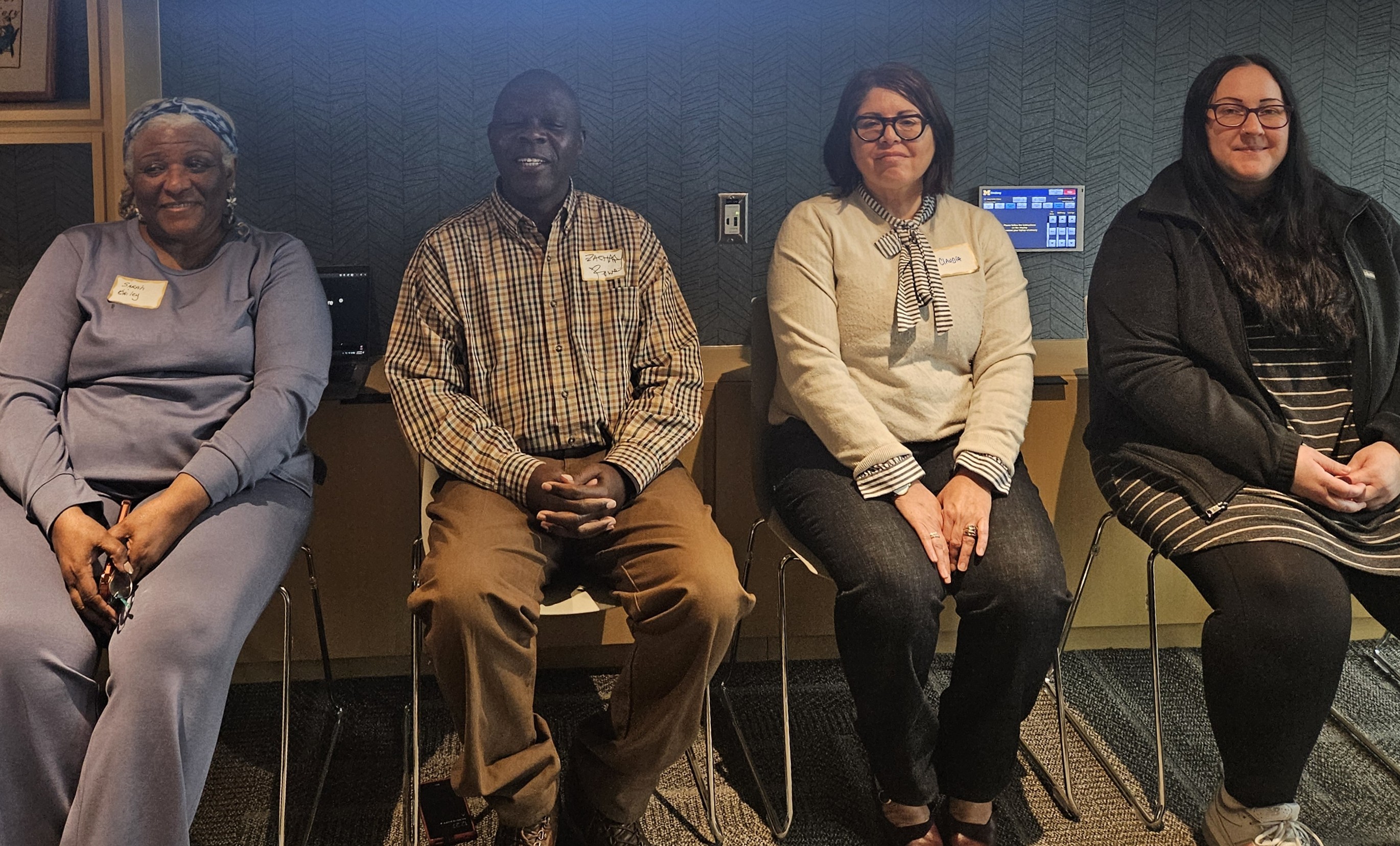
In addition to the Design Jam, a panel discussion was held with the following speakers: Dr. Sarah Bailey, CEO of Bridges into the Future; Molly Manley, Assistant Director of the Office of Community Engaged Learning; Claudia Diaz-Byrd, Program Manager in the Department of Psychology; and Zachary Rowe, Executive Director of Friends of Parkside. As the panelists spoke, audience members jotted down ideas to discuss afterward as part of the Design Jam process.
Some panelists commented on the amount of time and labor it takes to calculate, track, and receive compensation; one person noted that it took almost seven months to be compensated, which put their organization in a deficit and negatively impacted the relationship. These payment delays can have profound impacts on collaborators and real consequences for their work in the community. Knowing this, the university has a responsibility, then, not to replicate this harmful cycle of disenfranchisement, and hosting events like this is one step U-M can take to improve relationships and policies.
Another panelist brought up the idea of non-monetary compensation, questioning how we can share U-M’s wealth of resources for community partner work, like providing an accountant to make sure organizations are being paid fairly and are able to pour that compensation back into their work with the community. Having access to libraries and experienced grant writers would give our community partners more tools to use in their daily work. Including collaborators as co-authors on publications, rather than solely thanking them in the footnotes, would provide legitimate research that organizations could cite as experts in their fields.
Part of a national effort to reckon with higher ed’s relationship with its local communities, the event was a collaboration between multiple units on campus whose top priorities include providing fair, timely, and equitable compensation for U-M’s community partners. We’d like to thank the following campus partners who collaboratively designed this series:
- The University of Michigan School of Information’s Engaged Learning Office for facilitating the design jam
- Detroit Urban Research Center (Detroit URC)
- The Department of Learning and Health Sciences (UM Medical School)
- Graham Sustainability Institute
- Michigan Institute for Clinical and Health Research (MICHR)
- Michigan Social Health Interventions to Eliminate Disparities (MSHIELD)
- Poverty Solutions
- Science, Technology, and Public Policy Program (UM Ford School)
- Taubman Public Design Corps
- The Tishman Center for Social Justice and the Environment
We would also like to thank our community partners for participating and sharing their ideas and experiences
- Ann Arbor Hands-On Museum and Leslie Science and Nature Center
- Bridges Into The Future
- Brilliant Detroit
- City of Lansing, Michigan - Community Development Office
- Friends of Parkside
- FutureRoot
- Jefferson East, Inc.
- Linkage Community
- Mothers of Joy Institute for Parenting and Family Wellness, Inc.
- NEW Center
At the conclusion of the event, working groups were formed to focus on three potential solutions: the development of Community-Based Values and a Menu of Compensation Practices to guide our partnerships, as well as an online Compensation Portal for university and community partners to use, track, and complete payments. These working groups will present preliminary deliverables at the next event in the series in September.