
March 13, 2026
Written by Alaina Perez
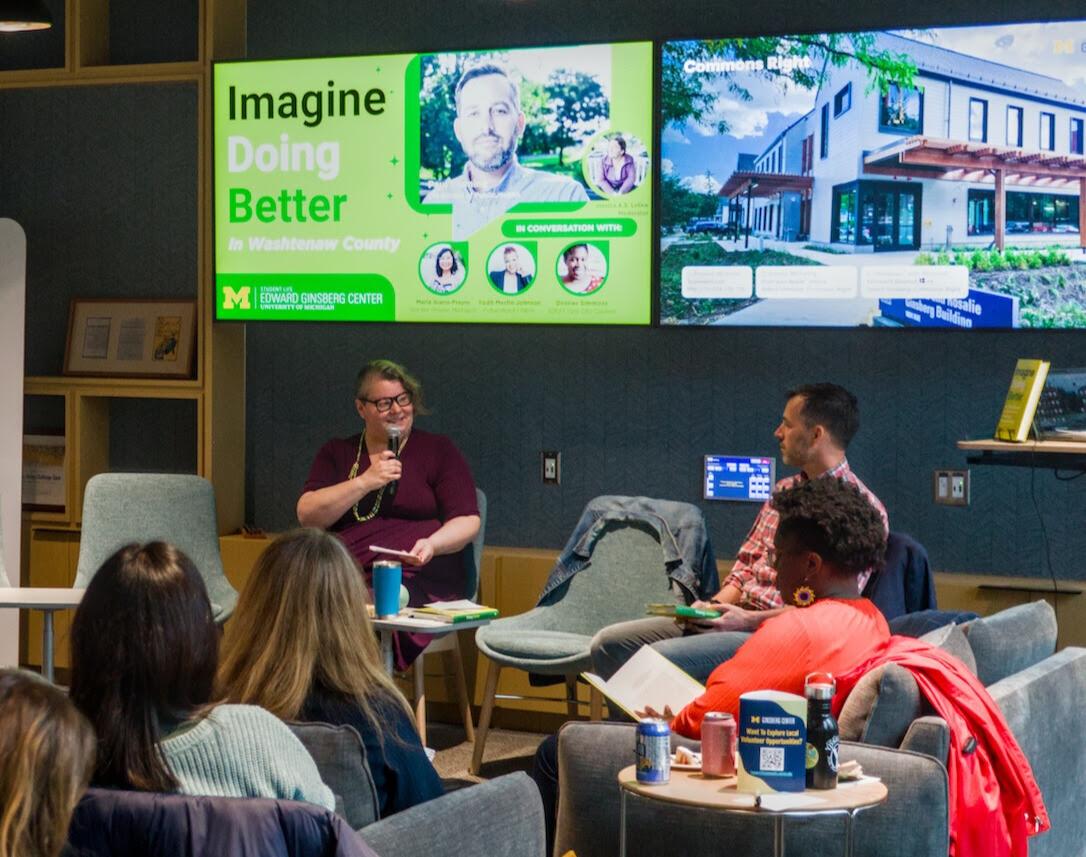
What kind of world do you want to exist in 50 years? This question, posed to attendees of a recent Book Talk hosted by the Ginsberg Center, set the tone for an evening spent discussing Dr. Paul Fleming’s Imagine Doing Better: Why Policies Backfire and How Prevention Thinking Can Change Everything (Johns Hopkins University Press, 2025).
The event, titled “Imagine Doing Better In Washtenaw County,” aimed to celebrate and explore Dr. Fleming’s book, alongside the work and words of community partners, to collectively imagine transformational change in Washtenaw County.
Local community leaders joined the author to discuss the book and to highlight radical change work being done in Washtenaw County and other areas of Michigan, including Maria Ibarra-Frayre, Co-Executive Director of We the People Michigan, Yodit Mesfin Johnson, Co-Founder of FutureRoot and Executive in Residence for Nonprofit Enterprise at Work (NEW), and Desirae Simmons - Director of the Interfaith Council for Peace & Justice (ICPJ) and Ypsilanti City Council Member. The event was moderated by Jessica A.S. Letaw, Ginsberg Center’s Community Leader in Residence ‘25-’26 and Co-Founder of FutureRoot and the Co-Liberation Collaborative.
About the Book
Dr. Paul Fleming is an Associate Professor of Health Behavior & Health Equity for the U-M School of Public Health, the author of Imagine Doing Better, and a husband and father. Inspired by a hope for his children’s generation and those to come after, Fleming’s book invites us to imagine, reflect, and take action.
When discussing Imagination, Dr. Fleming asked the audience to think critically and specifically about existing systems and policies. He urged us to consider how our constraints can help us gain new perspectives on what we can change. For Reflection, Dr. Fleming outlined preventive thinking, or proactively stopping harm from happening in our communities before it starts, rather than only reacting to it once the damage has been done. Action asks us to consider where we transform, how we transform, and what we transform. It directs us toward the future and what role we can each play in it, a praxis we can all participate in.
Imagining Together
Dr. Fleming’s talk was followed by a panel discussion with community leaders, Maria Ibarra-Frayre, Yodit Mesfin Johnson, and Desirae Simmons. Some of the questions and answers are summarized below.
How are you seeing imagination show up in your work and communities?
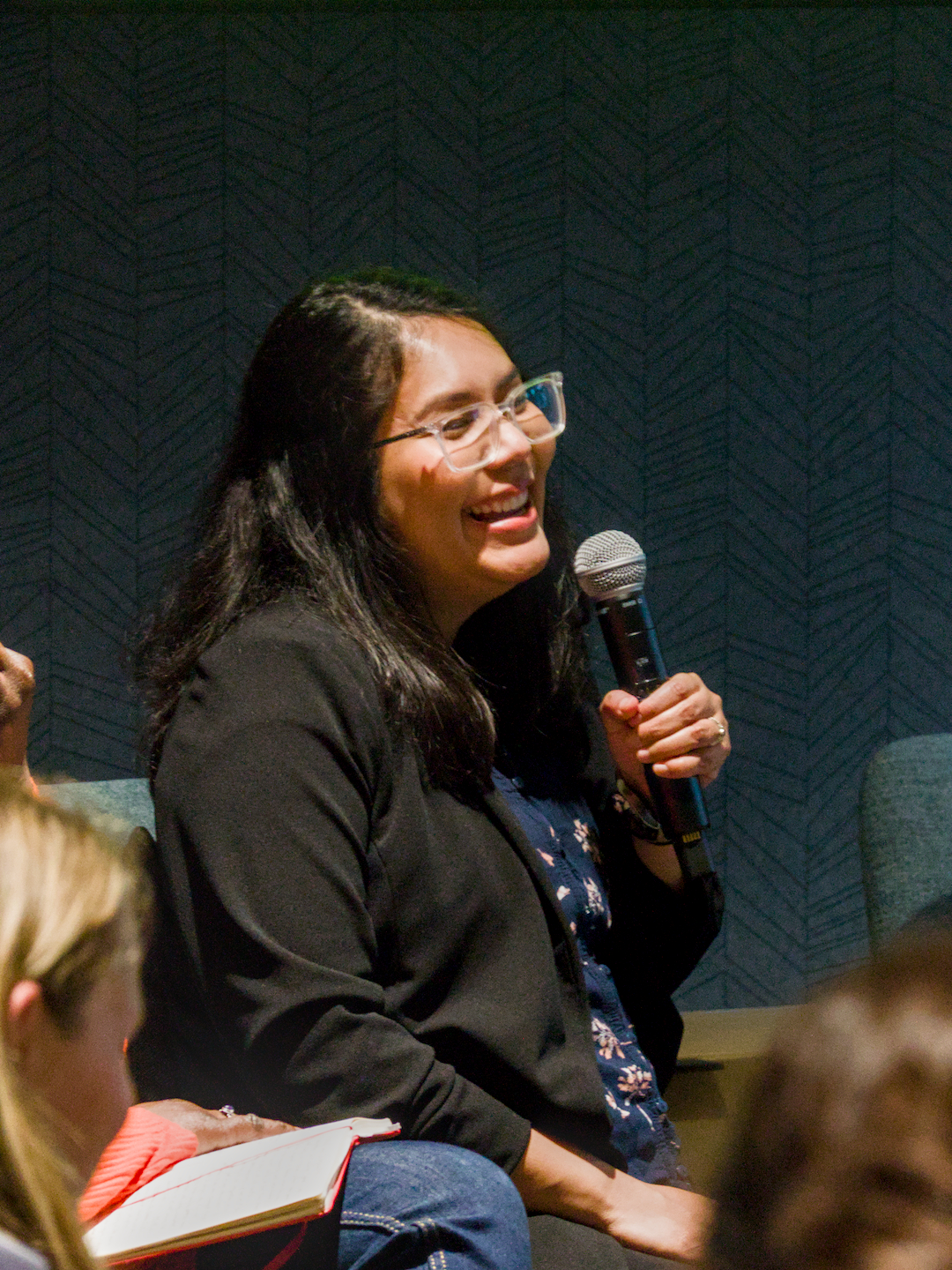
Ibarra-Frayre replied that to use imagination to the fullest extent, you need to have a constant belief that you can win and that you deserve it; that to make a change, you have to first believe it yourself.
Simmons pointed out that imagination is not just for artists and advised the audience that, sometimes, imagination is not always perfect. Sometimes what we imagine doesn’t work the first time. Sometimes our imagination is ready, but the world is not.
Mesfin Johnson questioned, “How is it that people who can’t relate to these communities are making the decisions?” She commented on feeling a sense of isolation as a community leader of color, but also feeling comforted in the fact that to “my ancestors… I am their prayers answered.”
All three discussants identified imagination as a radical act and a prerequisite for making transformational change in their communities.
Dr. Fleming asked the panelists, “When you think of the future you’re working towards and inviting the rest of us in, what are you trying to build in your community?
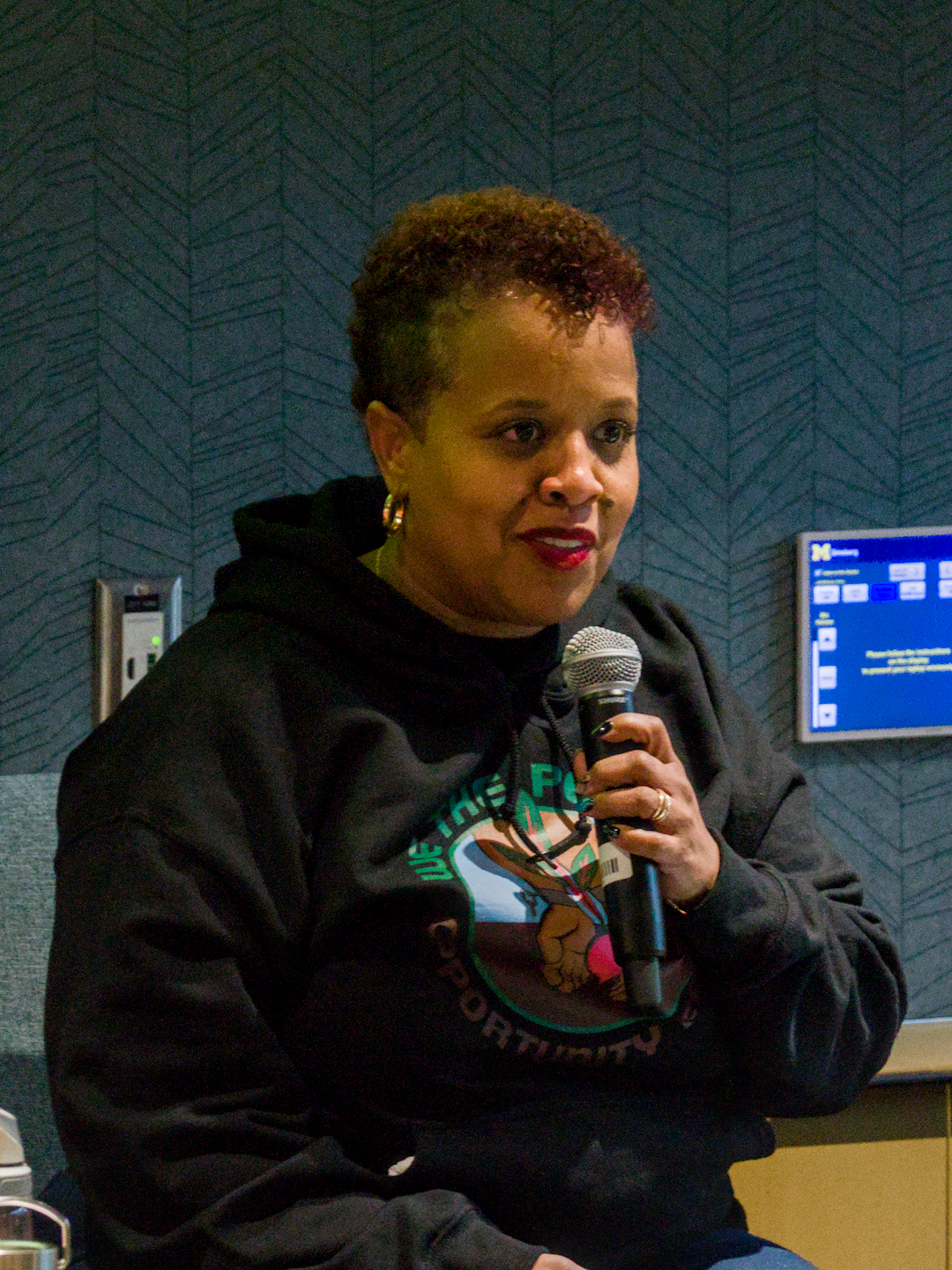
Mesfin Johnson discussed Champions for Change, a leadership training from NEW that is centered in Black womanist frameworks. She remarked that there has never been a time when Black women have gotten free that others don’t benefit, and that centering their needs and talents does not mean extracting or exploiting anyone else. She repeated that people in need want to hear, “I will believe you, and I will use my institutional or individual power to bring that to bear with you.”
Ibarra-Frayre asked the audience, "What is the power it would take to be safe? The future is where somebody doesn’t have to worry about ‘what do I do if ICE shows up to my neighborhood? If police are around?’” She questioned whether we have enough agency as humans to decide for ourselves what is best, to move in the world with the freedom and ability to take care of our families. She said that you have to keep earning the right to have this power. That it comes with a responsibility to connect with each other in respectful ways
In a world where many feel powerless, Simmons asked, “How do we turn the power back to the people?” She discussed how we imagine into those spaces where we work and expressed that, “The foundation we work on is not the foundation we’re gonna grow out of.” She mused on the strength of collective imagination and on using direct dollars and direct power to facilitate direct access.
A particularly poignant question came from the audience: How did you unshackle yourself from your own education and use your imagination?
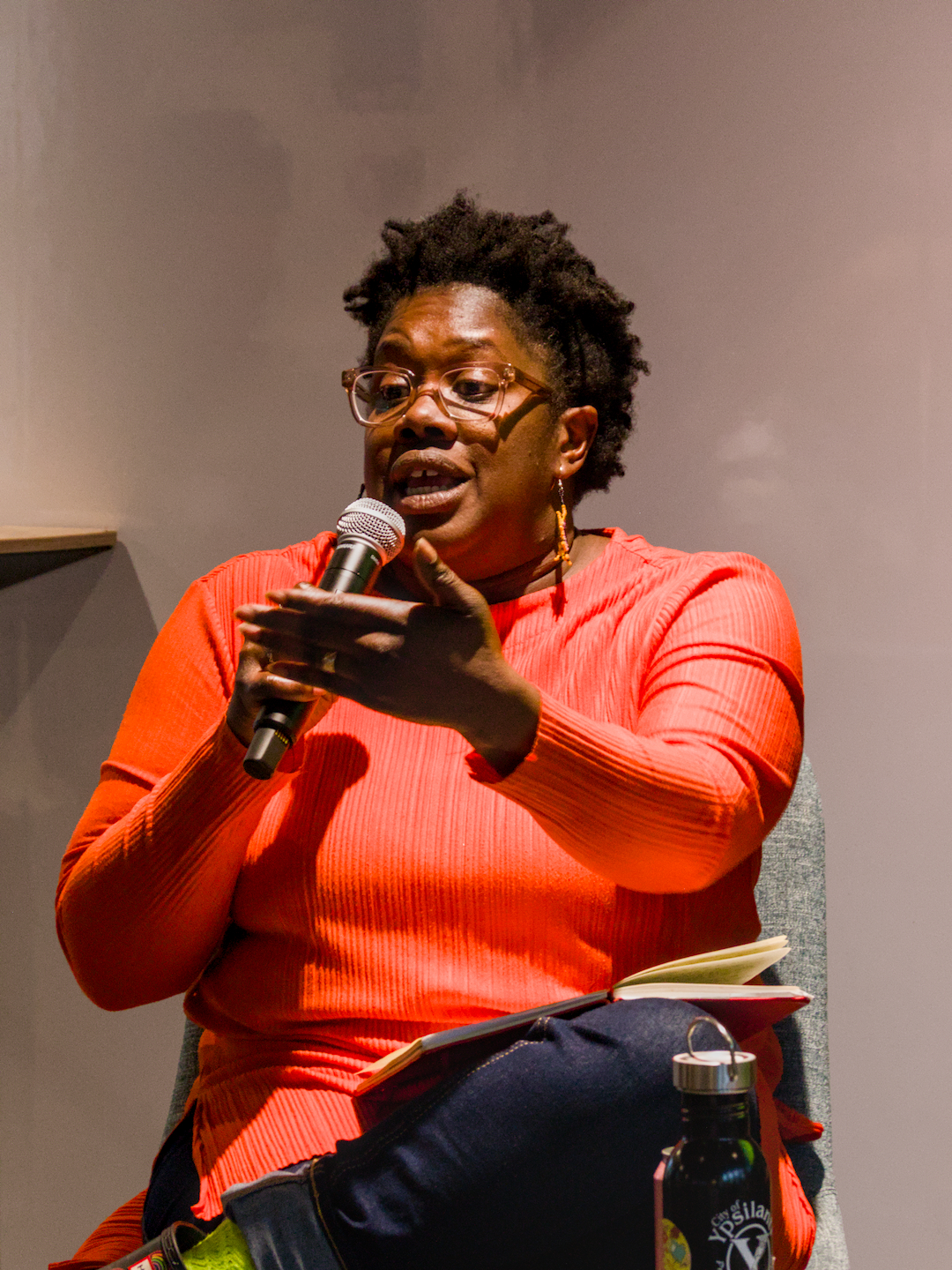
Simmons replied that this is still in process. She reflected on her experiences as a 14-year-old in an elite high school, thinking, “Wow, this country really doesn’t like me.” She interrogated harmful labels for young people like, “at risk,” Simmons pushed back, saying, “at-risk of what? Running things? Because I’m about to.”
Mesfin Johnson expressed her love for and connection to her son, saying, “My willingness to lean into healing the unhealed parts of me meant confronting all the ways I complied with supremacy, oppression, and reckoning with an identity of being only the victim.
Ibarra-Frayre talked about all the things undocumented persons in the US have to learn to do: how to get a job under the table, finding rides, surviving under the radar in this country, and the list goes on. She spoke of her identity as a poet: “Poetry was the only way I could really express the pain and hardness of my experiences.” She commented on the power of art as a liberatory means of self-expression and preservation.
Before opening up the conversation to the audience members, Mesfin Johnson commented on how to get more people to feel open to the idea of being a part of something larger than themselves: “When someone is not in a place to receive, you have to prime them for that. You have to listen to what they need in order to access it. Imagination requires mystery and faith.”
We would like to thank Dr. Paul Fleming, Maria Ibarra-Frayre, Desirae Simmons, and Yodit Mesfin Johnson, as well as the campus and community members who attended, for their thoughtful presence and undying faith in the mystery of Imagining Better.