
Written by Alaina Perez
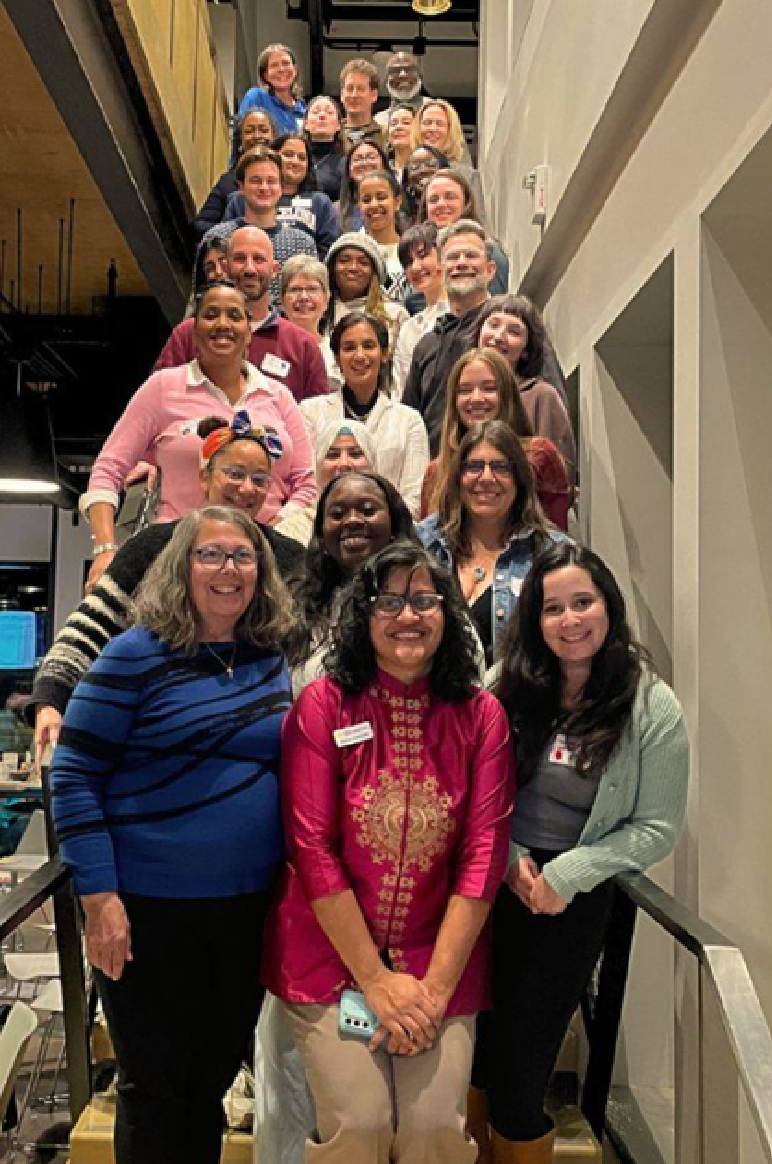
At Ginsberg, we believe that collaboration can foster positive change, which is why we recently held the first meeting of the Ginsberg Center’s Faculty, Student, and Community advisory boards. As new relationships were formed and old ones renewed, all three advisory boards were celebrated for their thoughtful work.
Advisory Boards at Ginsberg
In 1996, a Faculty Advisory Board (FAB) was formed to advise the Ginsberg Center on how best to align with the university's educational objectives. Today, FAB has representatives from 18 schools and colleges at U-M Ann Arbor and has recently expanded to include faculty representatives from the Dearborn and Flint campuses. Their work now focuses on advising Ginsberg Center on how to best support community engagement in their respective schools/disciplines.
The Student Advisory Board (SAB) includes U-M students who represent Ginsberg Center programs and initiatives, as well as student organizations on campus. They provide guidance, support, and feedback that advance the Center's work and broader community engagement at the university.
The Ginsberg Center’s Community Advisory Board (CAB) cjurrently has eleven members and five auxiliary members who represent a range of fields, including mental health, food access, re-entry, housing justice, education, sustainability, and public health. From small grassroots organizations to county offices to national organizations with a local focus, CAB members are community champions who help deepen our understanding of the people and places we work with.
Visions for Engagement
As key stakeholders in the Center's work, we invited board members to share ideas and inform our future plans as we continue to make the most of our new space. Participants made connections and dreamed up ideas for using the Center’s new space. Many people suggested using the Center to host events focused on forging new relationships between students and academic and community partners. For example, some suggested having conversations with elected officials at the center, having an open house where students and faculty could find partners to work with, and hosting various speakers, artists, and teach-ins.
In smaller groups, the discussions turned toward ways that our advisory boards could collaborate moving forward. Some participants discussed ways to bring students out into the communities they work with, like organized outings and service days. Others brought up how a succession of events could be more impactful than a singular one; suggesting a lunch and learn series where students, faculty, and community members could come to learn more about local nonprofits looking to spread awareness and seek support. From these discussions, it was clear that budding relationships were forming across all three boards and that there was a need to continue these connections.
Thank you to all of our board members for attending our mixer and for the many ways they support and advance the work of the Center.